Individual vs. Centralized: What Are the Advantages of Each?
1. Individual Heating: The Flexibility Option
A residential building’s heating is considered individual when the heating unit is specific to each apartment, whether gas, electric, renewable, or otherwise. The unit is located within each household’s dwelling, and the occupants are directly responsible for maintaining and paying for it.
Common types of individual heating include:
- Individual gas boilers (which often also provide domestic hot water);
- Electric heating (convectors, radiators, underfloor heating, etc.), often paired with an individual hot water tank;
- Air-to-air heat pumps (though less common in apartments due to aesthetic and noise concerns).
With individual heating, occupants are the sole decision-makers for day-to-day maintenance and repair of their heating equipment, for choosing their energy supplier, and for setting heating schedules and temperatures. Each household pays only for the energy they actually consume, which is often cited as a key advantage for buildings with this type of system.
2. Centralized Heating: Shared Resources as a Guiding Principle
Heating is described as “centralized” or “collective” in a building when there is a single heating unit serving all dwellings. It is located in a shared boiler room, and the heat (typically hot water feeding radiators) is distributed through a pipe network throughout the building. Centralized heating enables shared maintenance costs and economies of scale on pricing. Decisions about the heating system (start dates, supplier changes, etc.) are made during general assembly meetings of the co-ownership association.
Common types of centralized heating include:
- Gas, oil, or wood boilers
- Heat pumps
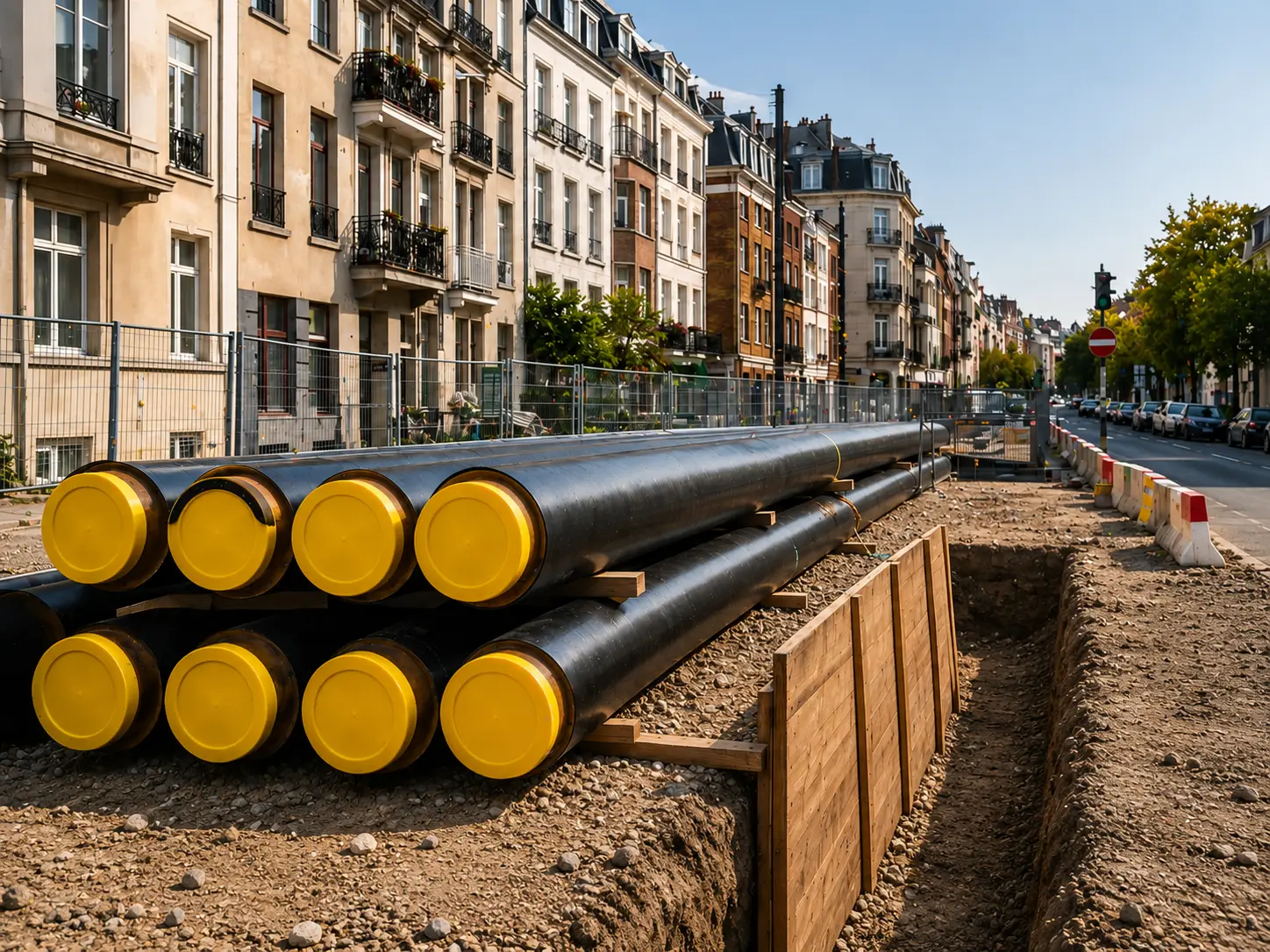
- Connection to a district heating network
Individualizing Heating Costs: Where Do Things Stand?
To ensure each household pays fairly for its heating needs and is invested in managing energy demand, the French government introduced a requirement for co-ownership associations to bill heating based on actual consumption rather than property shares. This obligation has been in effect since 2020 for all co-ownerships with energy consumption exceeding 80 kWh/m2 per year. Calculation is performed via individual thermal energy meters that measure each dwelling’s actual consumption, or alternatively via cost allocators (which measure the temperature near radiators).
What Are the Key Selection Criteria Based on Building Characteristics?
When constructing a residential building, numerous parameters come into play when determining the most suitable heating type.
1. Current Regulations
In order to limit greenhouse gas emissions, French regulations prohibit:
- The installation of oil-fired boilers, whether individual or centralized, since 2022 — even in existing buildings;
- The installation of gas-only heating in new buildings: gas may still be used in a supplementary role alongside a renewable energy source.
These two restrictions are set to transform the sector, as natural gas heating has historically held a prominent place in multi-unit residential buildings.
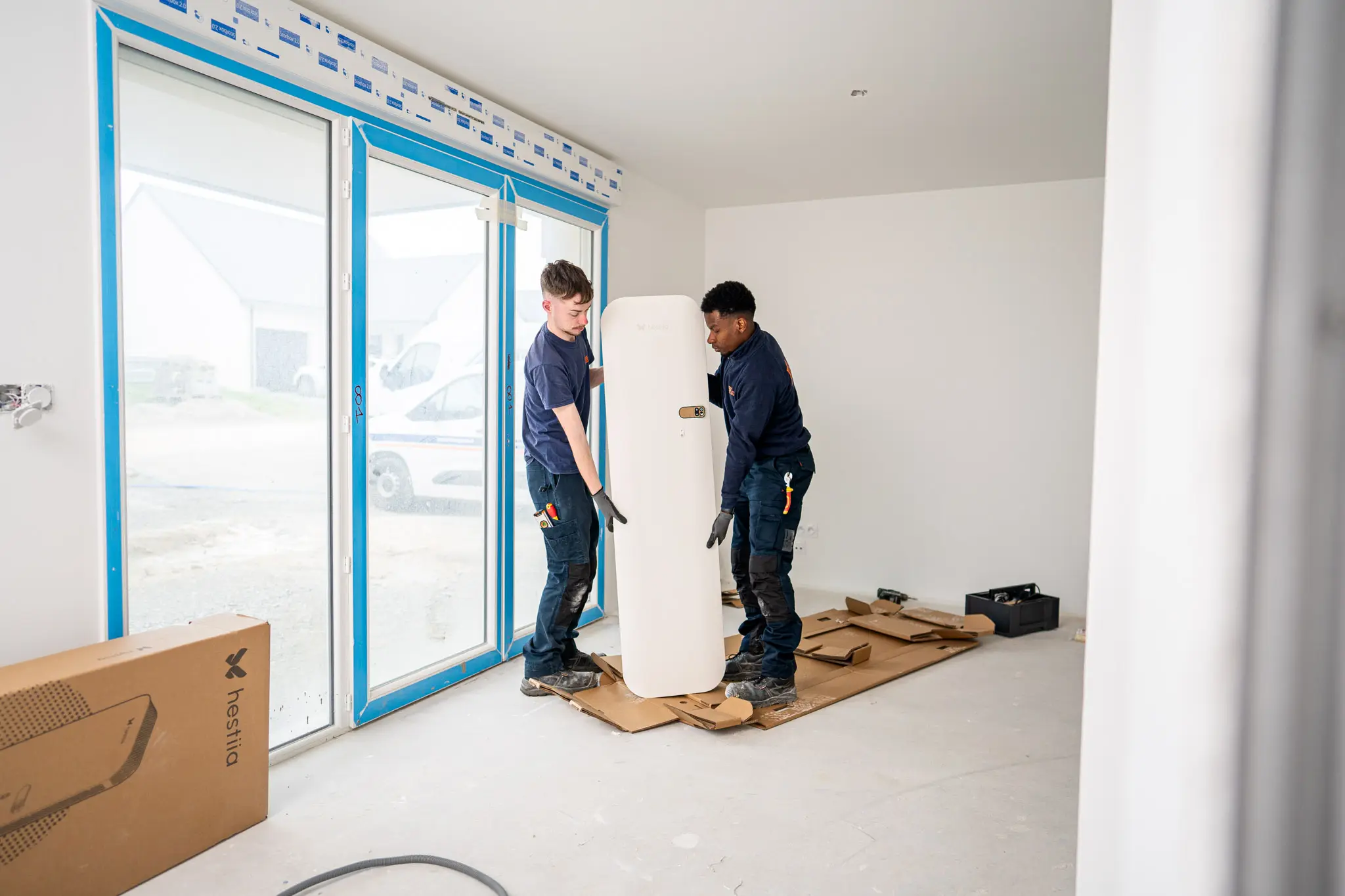
More broadly, RE2020 (France’s 2020 Environmental Regulation) is reshaping the rules for new construction with environmental requirements that steer decisions toward cutting-edge solutions, particularly to reduce primary energy consumption. Within this framework, heating systems that use renewable energy or that rely on waste heat recovery are best positioned to meet current standards. This is why digital heating, which harnesses energy that is already required for computing workloads, can achieve the mandatory performance scores for new construction.
In most cases, meeting RE2020 requirements involves hybrid solutions: for example, a mixed wood-gas heating system, or a heat pump supplemented by a backup gas boiler.
2. Available Space
For most energy sources, installing a heating system requires space. Depending on the building’s configuration, a centralized boiler room (basement, ground floor, etc.) may be preferable to having an individual boiler in each apartment — or vice versa.
In all cases, given the historically high cost of real estate in France, the question of utility rooms is a key factor to consider. This can tip the balance toward electrical heating solutions or connection to a district heating network.
3. Construction and Operating Budget
The financial dimension is unsurprisingly a major decision criterion for engineering firms and building owners. Finding the right balance between optimized costs, building quality, and future occupant comfort is a complex equation — especially within the demanding framework of the RE2020 environmental regulation.
Compliance with RE2020 criteria often leads developers to consider installing a heat pump and/or solar panels, but these can quickly increase costs, both at installation and in maintenance. The pursuit of cost optimization can then lead decision-makers to consider new hybrid solutions — for example, pairing digital heaters with a thermodynamic hot water tank.
4. Co-Ownership Size
The number of units in the co-ownership plays an important role in the discussion about heating system choice. Indeed, the primary benefit of centralized heating lies in shared maintenance costs (servicing, repairs) and the economies of scale on pricing. It follows that a large co-ownership has a more obvious incentive to favor centralized heating.
For example, connecting to a district heating network requires a high initial investment, which is therefore better suited when it can be shared among many co-owners — who then benefit from its numerous advantages.
Conversely, wood-fired heating is better suited to smaller co-ownerships due to logistical constraints (storage): it is recommended below a capacity of 200 kW.
5. Occupant Expectations
Co-owners’ preferences are also part of the equation. While one naturally thinks of their environmental awareness and desire for savings, their need for comfort should not be underestimated. This translates into the desire for heating that is stable, quiet, and controllable.
Building managers observe very strong demand for “fair billing,” going beyond the regulatory requirement for individualized heating costs — a clear advantage for heating solutions that are truly tailored to each household’s specific needs.
6. Building Type
The nature of the building (standard residential apartments, senior residences, student housing, attached single-family homes) can also influence the choices made by engineering firms and building owners during the early design phase, as usage patterns and expectations differ.
At hestiia, we specialize in advising construction decision-makers on heating system choices. Shall we discuss your project together?