Simpler. More profitable. More sustainable.
The waste heat recovery radiator
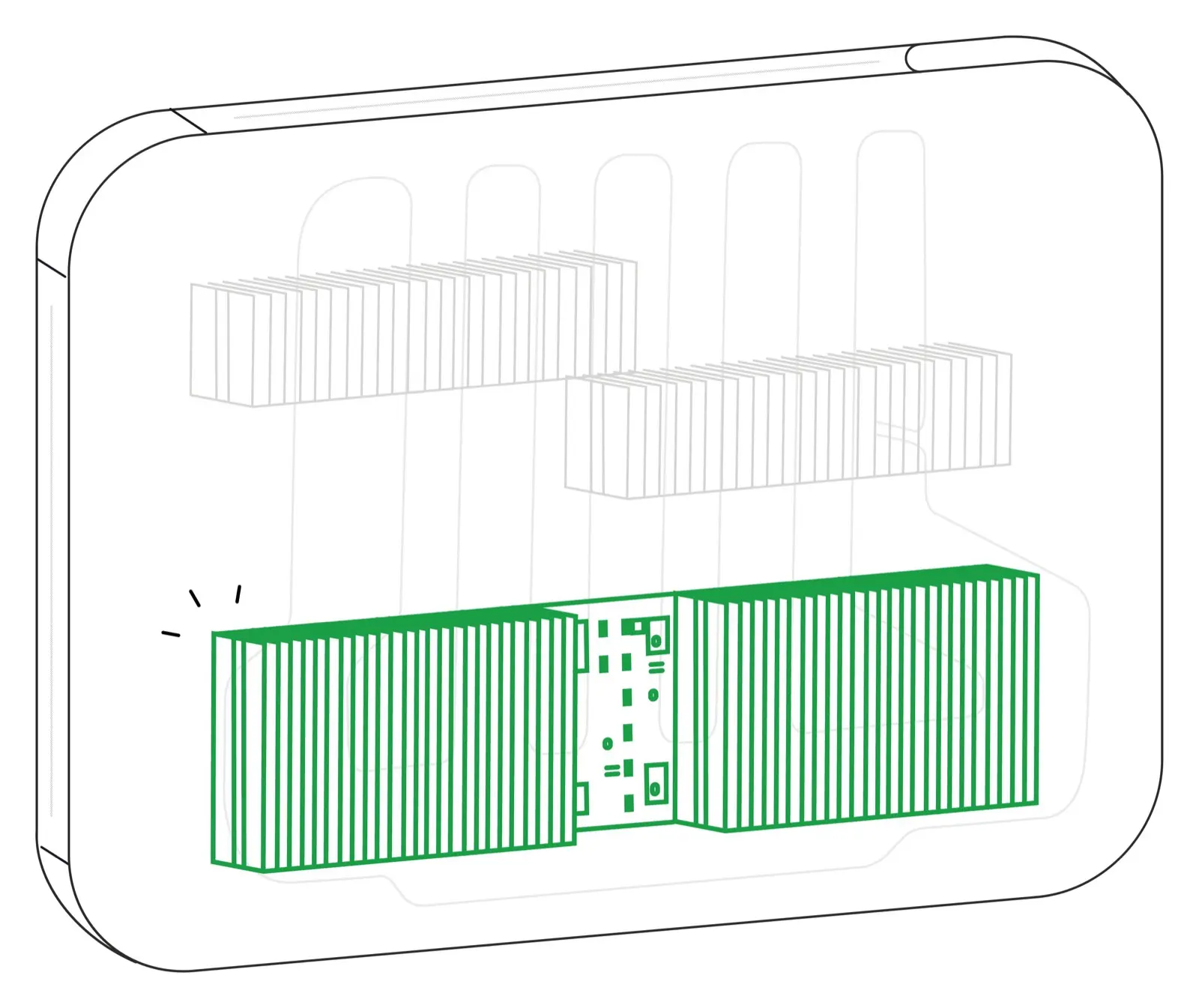
myEko Pro® combines the simplicity of a smart electric radiator with an Embedded Waste Heat Recovery (RCE) module. A solution designed to heat efficiently while meeting today's energy and environmental challenges.
Book an appointmentHow does it work?
Harnessing waste heat
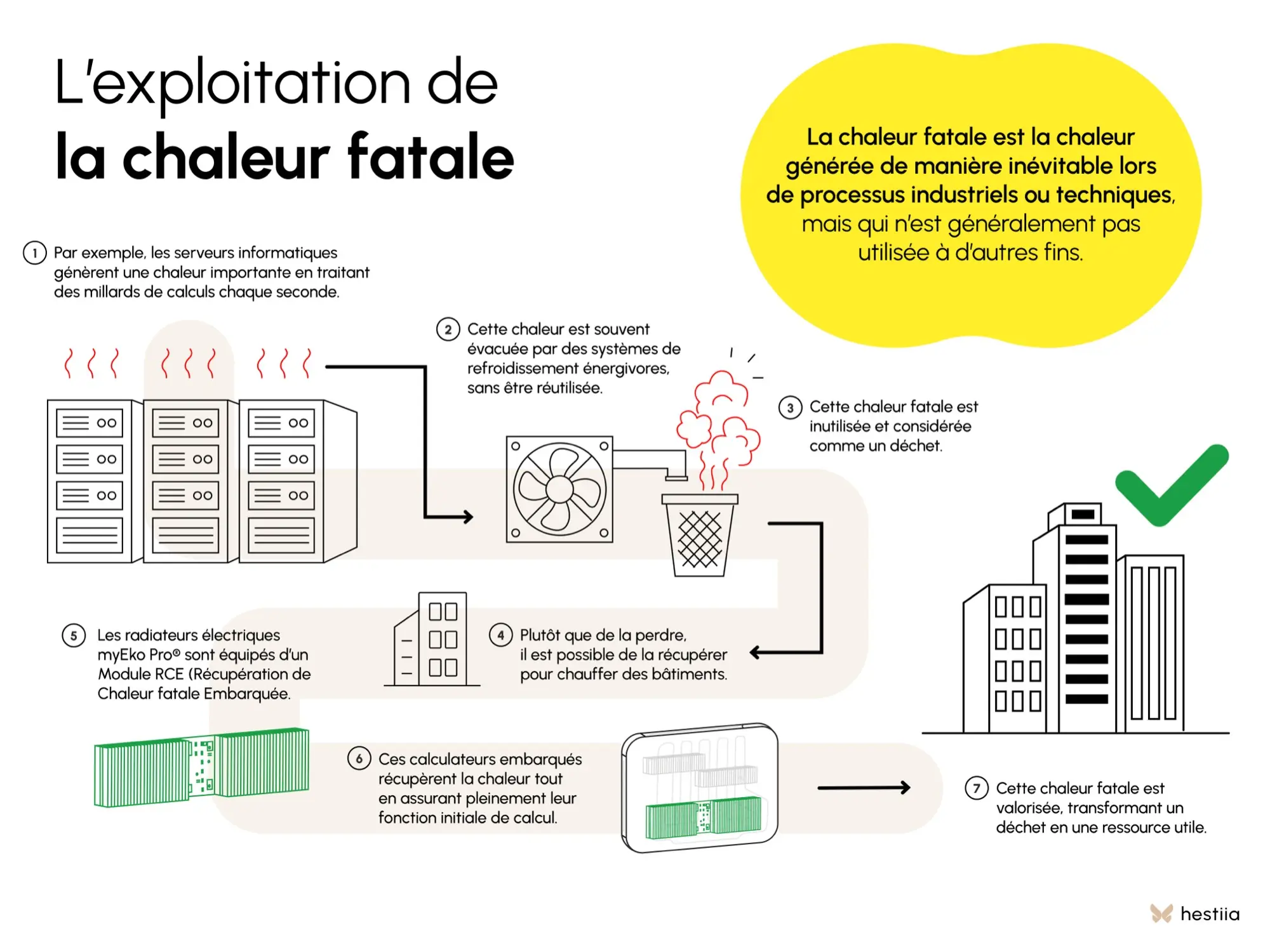
Waste heat, recovered and revalued
myEko Pro® radiators reduce national energy consumption by using a single energy source to simultaneously perform computing tasks and heat homes, whereas traditionally data centers and radiators consume energy separately.
The savings are even greater given that data centers use nearly 40% more energy to cool their servers. By performing these calculations inside the myEko Pro®, the electricity previously wasted on cooling is eliminated entirely, enabling a reduction in primary energy consumption and the decarbonization of housing stock at a national scale.
The waste heat recovered by myEko Pro® is a renewable form of energy.
Good to know
Thanks to their passive dissipation, myEko Pro® radiators operate silently and help stabilize the electrical grid.

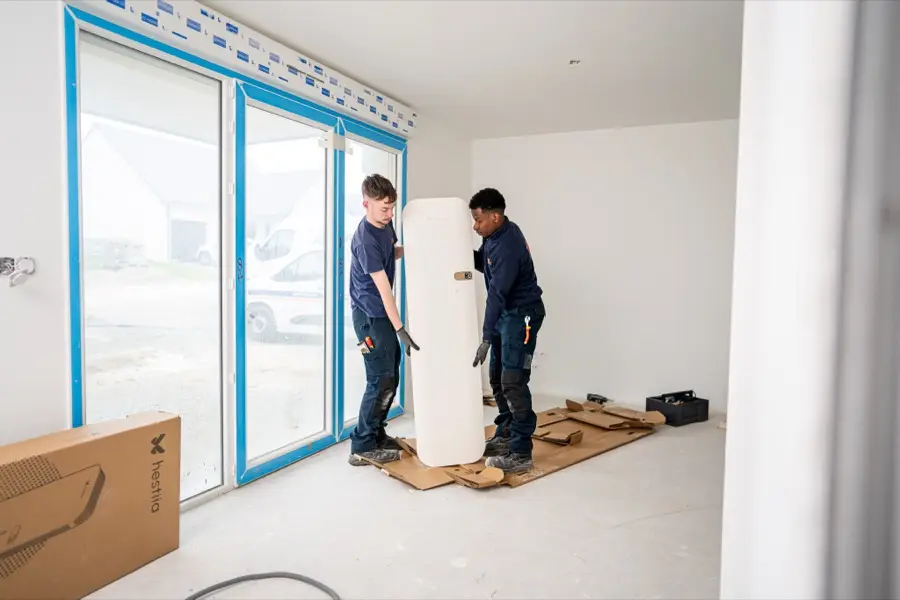
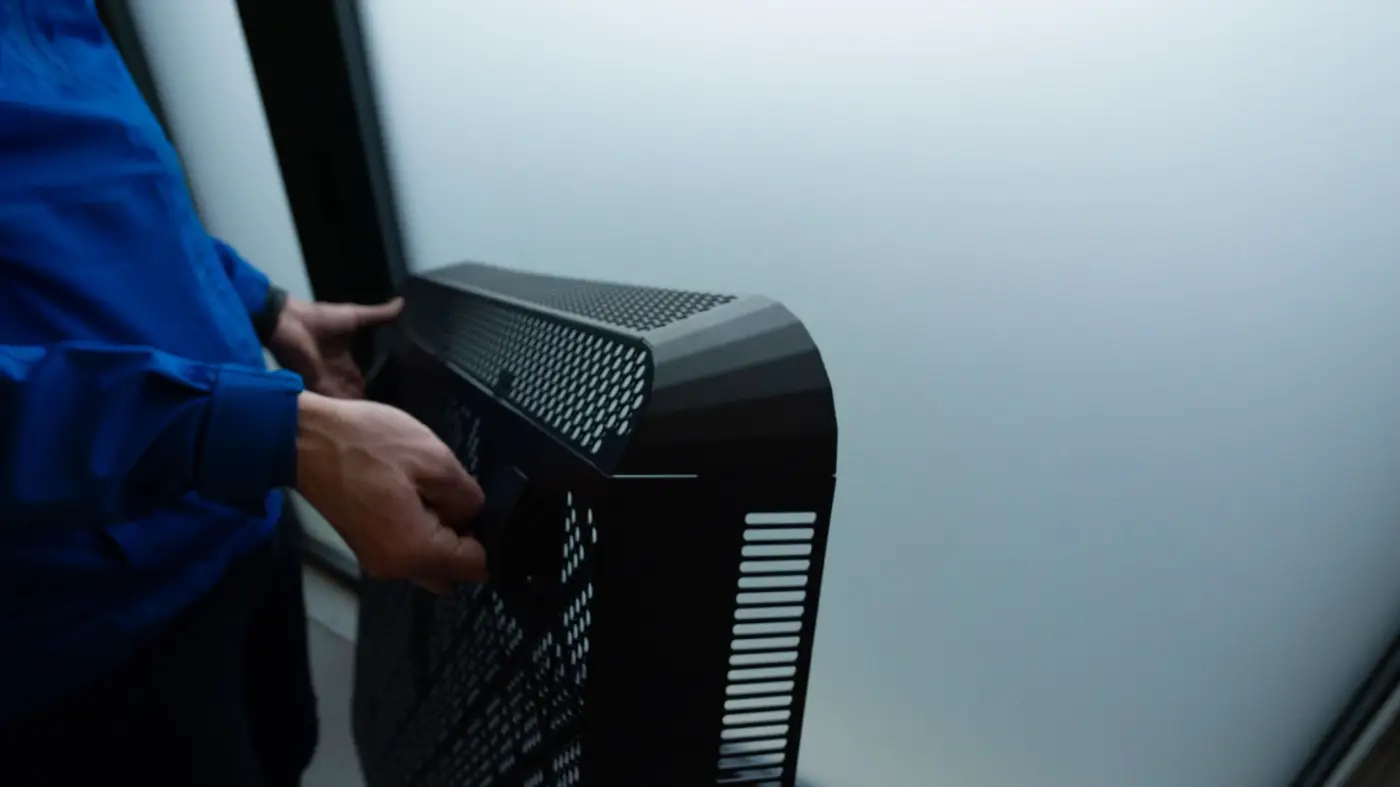
Comfortable warmth, intuitive controls, and lower energy bills.
A response to national challenges
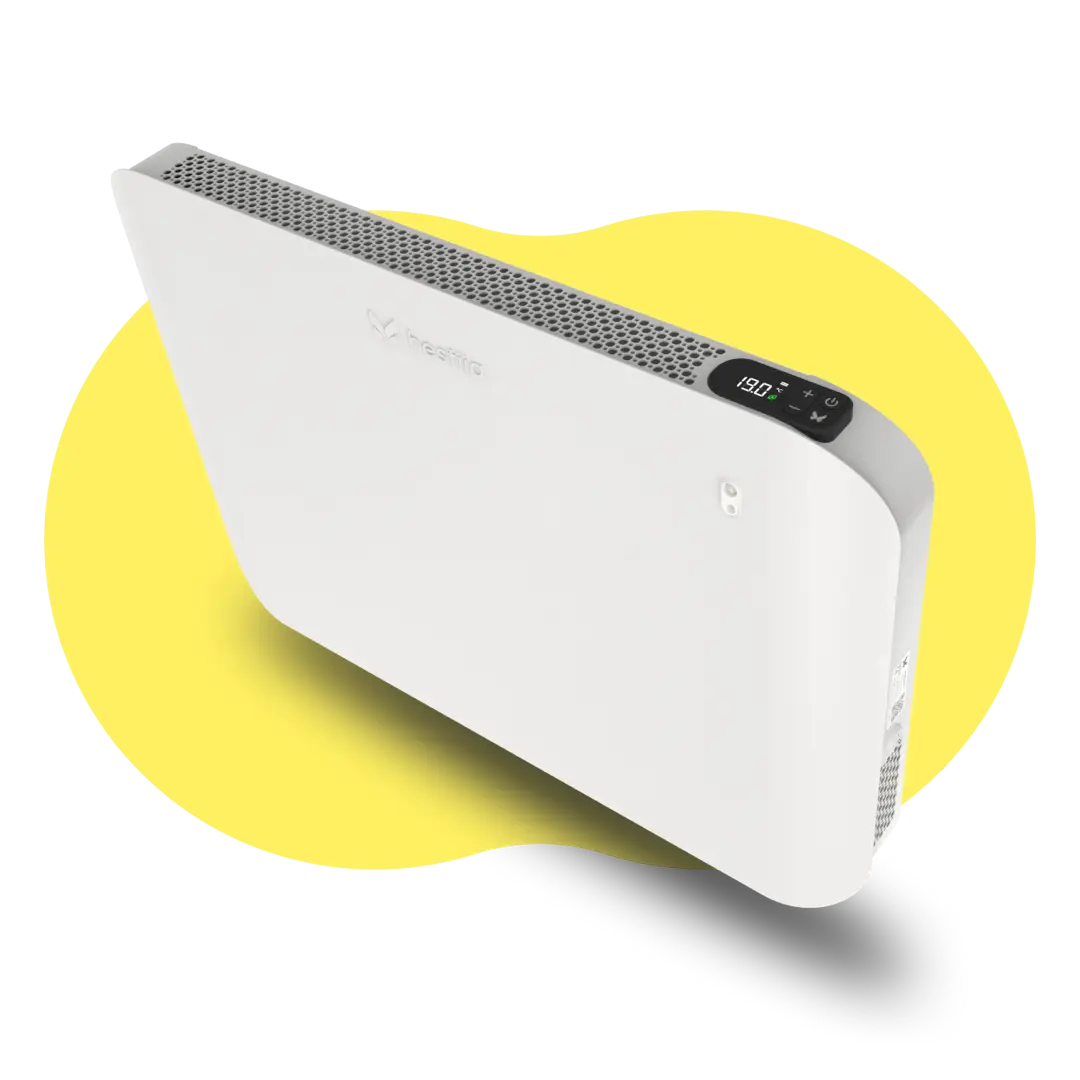
myEko Pro® addresses two major priorities: reducing the carbon impact of heating and lowering electricity demand at a national scale.
By harnessing the waste heat generated by computing, our technology:
Reduces the need for primary energy
Helps achieve the goals of the National Low Carbon Strategy (SNBC) and the Energy-Climate Law
Eases pressure on the electrical grid in the context of growing electric vehicle adoption and expanding digital infrastructure
Recognized by France 2030
Hestiia was selected for the France 2030 program for its approach at the intersection of digital technology and the energy transition, addressing the key challenges of climate and technological sovereignty.

Why calculation?
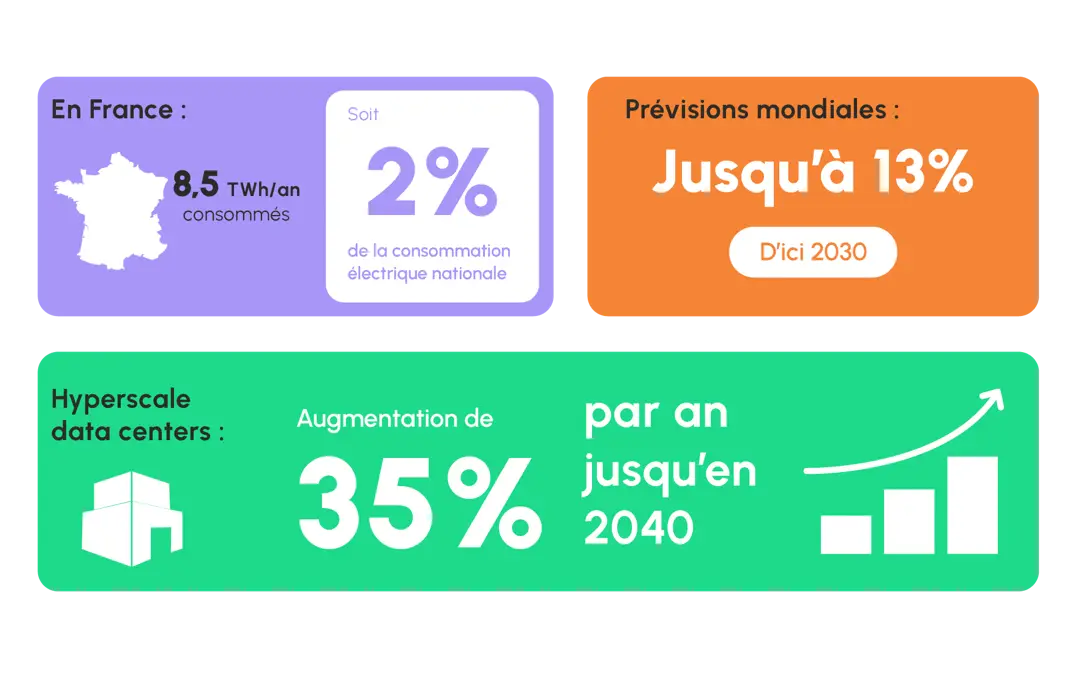
Digital usage is surging, especially in artificial intelligence.
In France, data centers already consume 8.5 TWh per year, representing 2% of national electricity consumption. By 2030, AI alone could account for 13% of global energy demand.
Rather than letting this heat go to waste in massive data centers, hestiia decentralizes it and puts it to use locally.
What type of computing is performed?
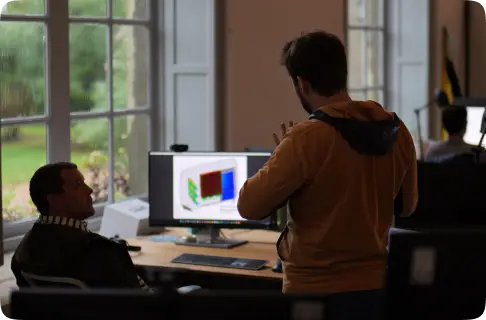
Hestiia runs inference calculations for artificial intelligence models used by leading technology companies.
This type of computing:
Requires no data from the home,
Runs completely independently of the occupants,
Allows the heat generated to be recovered and reused locally.
Our modules never process personal or housing-related data. There is no interaction between the home and the computing tasks.
Book an appointmentWhat is the computing revenue used for?
Revenue from computing is fully reinvested in the development of new free features for users.
These features are designed to be compatible with all generations of myEko Pro® radiators, at no additional cost to users.
Better-managed energy costs
Sustainably reduce heating-related expenses
A reduced carbon footprint
Lower the environmental impact of the products
Consistent thermal comfort
Stable, pleasant warmth tailored to everyday living
Have questions?
We have the answers.
Installation, thermal calculations, compliance, ongoing support: find clear answers to the most common questions about myEko Pro®.
Is there a difference in efficiency between heat from the resistor and heat from the computing module?
The radiator consumes the same amount of energy as a conventional electric heater.
- Whether it operates with the resistor alone or with the resistor and computing module combined, electricity consumption remains the same.
- There is no additional consumption caused by the computing activity.
The electricity used for computing is entirely converted into useful heat.
- A conventional electric heater converts 100% of consumed electricity into heat.
- Our radiator works on exactly the same principle:
- Part of the heat is generated by the resistor.
- The rest comes from the computing module, which reuses energy to produce heat.
What does hestiia do with user data?
Our radiators are connected and equipped with smart sensors to optimize heating management and improve energy efficiency. However, hestiia does not collect or use occupants' personal data for commercial or advertising purposes.
The purpose of this connectivity is to optimize thermal comfort and reduce energy consumption, without ever compromising occupant privacy.
Why do people confuse computing power with user data?
It is natural for some people to associate computing power with the use of personal data. This confusion stems from the fact that, in other contexts (Google, Facebook, mobile apps, etc.), computing power is often used to analyze, process, and exploit user data for commercial purposes.
However, in our case, the computing power of the radiators has absolutely no connection to occupant data.
What our computing power is used for:
Our integrated processors handle external tasks completely unrelated to end users, such as:
- Scientific modeling and simulations
- Optimization of artificial intelligence algorithms
These tasks require no access to occupant data and run entirely independently of the home and its inhabitants.