A buyer is viewing an apartment. They like the layout, the light, the location. Then a very concrete question often comes up:
“Is the heating individual or collective? And the charges, roughly how much are they estimated at?”
Behind this question, the stake is simple: the buyer wants to know whether they will be able to control their consumption, avoid unpleasant surprises and plan around readable charges.
The heating system is not always the first criterion mentioned in a property search. But when it comes to deciding, it can reassure or, on the contrary, create doubt.
For sales teams, the challenge is therefore not to explain everything. It is to know what to say, when, and at what level of detail.
A technical subject does not have to become a technical pitch
When a solution is innovative, people often think they have to start by explaining how it works.
That is understandable. But during a sales viewing, it is not always the right reflex.
A buyer does not need to understand the technical detail of a system to be reassured. When you talk about a heat pump, you do not start by precisely explaining the thermodynamic cycle. You first talk about comfort, performance, consumption, charges.
It is the same with a computer. You do not sell a new model by immediately detailing how each component works with the others. You talk about battery life, smoothness, power, ease of use.
For the waste heat recovery radiator, the logic is the same.
The buyer does not need, from the very first explanation, to understand the whole mechanism of embedded waste heat recovery. What they want to understand is what it changes for them.
- Will the home be comfortable?
- Is the heating simple to use?
- Are the charges readable?
- Do they keep control of their consumption?
That is where you should start.
The real subject: controlling charges
For a buyer, heating rarely points to a technical curiosity. It points above all to a very concrete concern: cost.
In a new-build home, the starting point is not the same as in an older one.
A buyer may have in mind apartments built in the 1980s, 1990s or 2000s, with insulation levels very different from current standards. At the time, thermal performance requirements were much lower than they are today.
In new-builds, the building is designed to limit heat loss: better insulation, better airtightness, reduced heating demand. The subject is therefore not only the type of heating installed, but also the home’s actual level of need.
An individual radiator in a well-insulated new-build home does not play out like an electric radiator in a poorly insulated older apartment.
But even in this more favourable context, the buyer wants to understand what they will have to pay day to day.
With some collective systems, the pitch can quickly become harder to hold: operating contract, allocation of charges, maintenance, year-end adjustments, dependence on a shared infrastructure.
These elements are not always problematic in themselves, but they require more explanation. And the more you have to explain, the more you risk opening new questions.
With individual heating, the message is more direct: the occupant controls their heating, adapts their consumption to their usage, and more easily understands what they pay.
For sales teams, this is an important point. The simplicity of the pitch matters as much as the quality of the solution.
Waste heat recovery radiator: what to explain, and to whom
The waste heat recovery radiator is an innovative solution. But that does not mean its operation must be explained the same way to every audience.
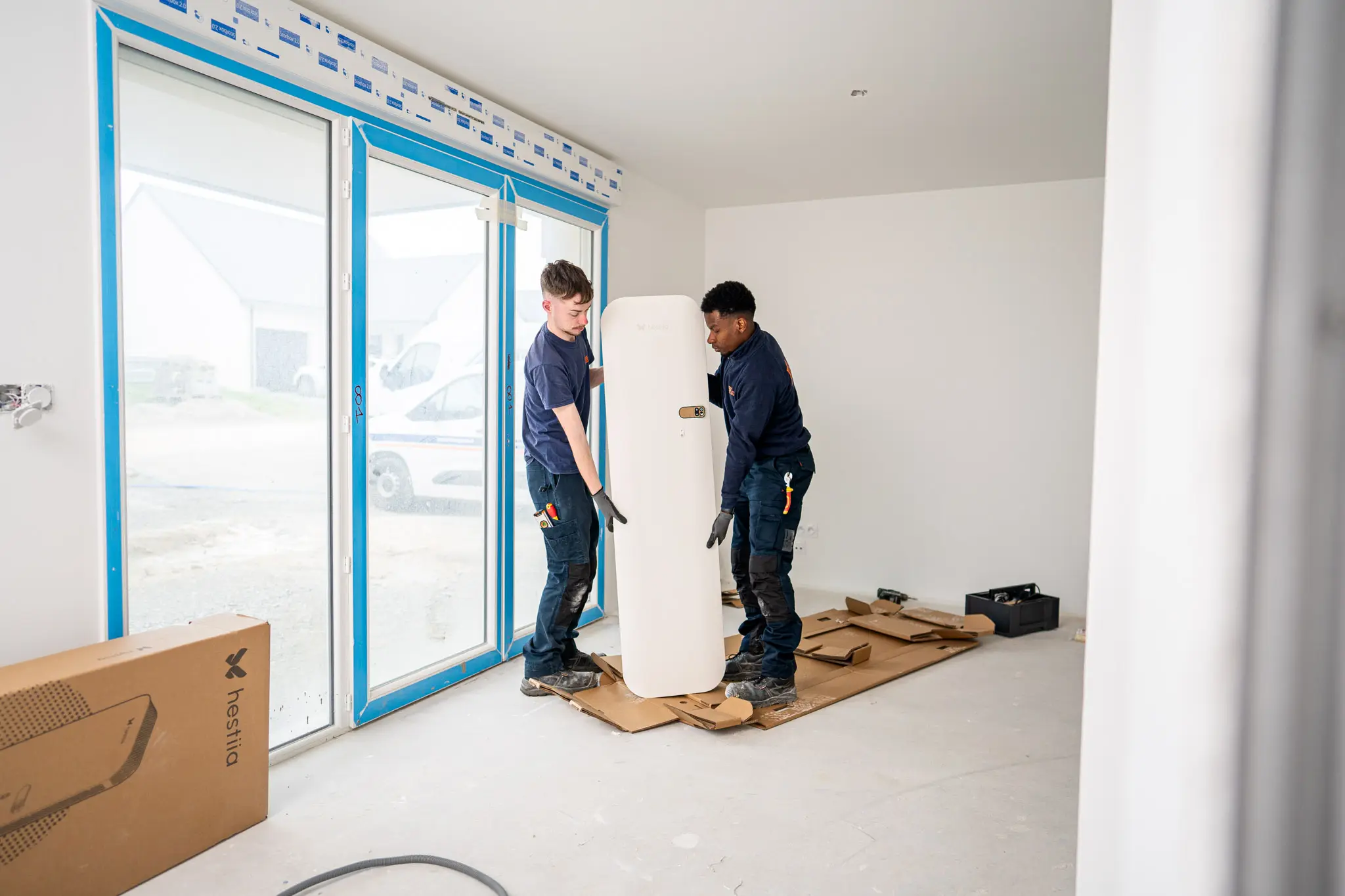
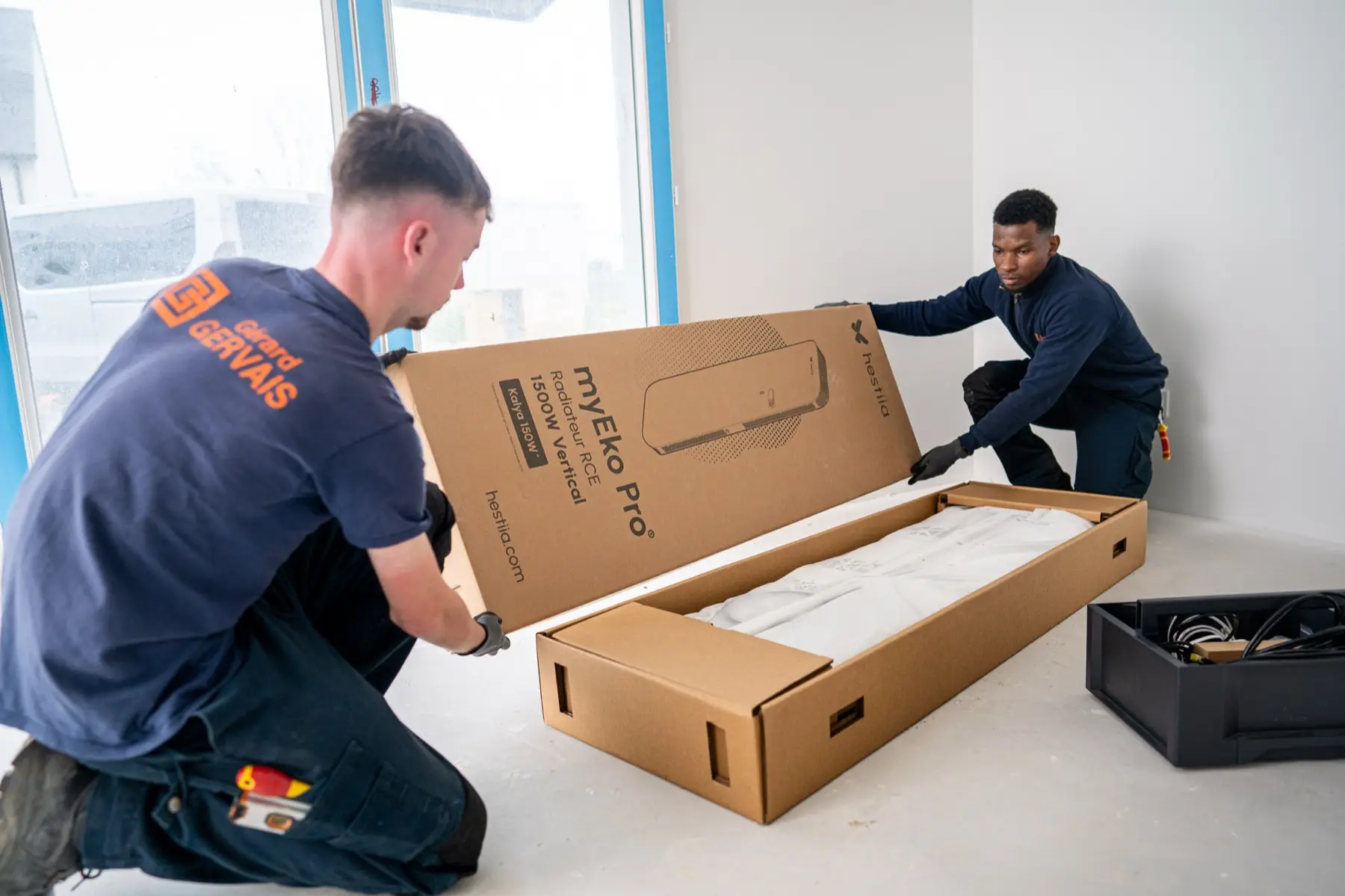
For the resident or the end buyer, the experience stays simple: they have a connected, individual electric radiator that is easy to control and lets them manage their comfort day to day.
That is what matters to them.
For the resident, the waste heat recovery mechanism does not need to be detailed. As with many building systems, the end user does not need to know the whole technical architecture to understand its use. They mainly need to know what it changes for them.
In the case of the waste heat recovery radiator, it boils down simply to this: a connected, individual electric radiator that is easy to control, in a well-insulated new-build home.
Waste heat recovery technology mainly takes on importance upstream of the project.
It answers the environmental and regulatory challenges of new-build construction. That is why it must be explained more precisely to engineering firms, building owners and installers.
- For an engineering firm, the point is to understand how this heat recovery is taken into account in the building’s environmental performance.
- For a building owner, the point is to understand why this solution makes it possible to integrate individual electric heating into a new-build project while meeting regulatory requirements.
- For an installer, the point is to understand why they cannot replace this radiator with a standard electric model without altering the project’s technical and regulatory balance.
But for the resident, the pitch must stay centred on use: a connected, individual electric radiator that is simple to control, in a well-insulated new-build home.
Waste heat recovery therefore does not need to be put forward as a direct use benefit. It should rather be presented as what allows the project to reach its environmental and regulatory goals, while keeping a simple solution on the occupant’s side.
The right order of the pitch: benefit first, technology second
A common mistake is to present an innovative solution by starting from the technology.
For example:
“It is a radiator with computing modules that recover waste heat.”
The sentence is accurate. But for a non-technical buyer, it can create more questions than reassurance.
It is better to start with a phrasing closer to their concerns:
“The home is fitted with individual heating that is simple to control, letting you manage your comfort room by room and keep control of your consumption.”
Then, only if the person wants to understand why this solution was chosen for the project, you can open up about the technology:
“This choice also allows the project to meet its environmental and regulatory goals, thanks to a heat recovery technology built into the radiator.”
This approach changes everything. The technological aspect is placed in the right spot.
And above all, it is not presented as a direct use benefit if it is not what the resident will experience day to day.
What sales teams should remember
The waste heat recovery radiator is simple to present, provided you start from the right angle.
It is not about starting with its technology, but with what the buyer really wants to understand: the type of heating, daily use, control of their consumption and the readability of charges.
If you start with the benefits, the pitch naturally becomes clearer.
The right reflex is therefore:
-
Reassure about the type of heating
The home is fitted with individual heating.
-
Reassure about the new-build context
The home is better insulated than an older one and its heating demand is reduced.
-
Reassure about use
The radiator is controlled simply, according to the occupant’s needs, directly from the device or via the hestiia app.
-
Reassure about charges
Heating consumption is tied to how the home is used. Consumption tracking is available via the app.
-
Explain why this solution was chosen (only if the context calls for it)
Waste heat recovery is mainly a matter of the building’s environmental and regulatory performance. It concerns engineering firms, building owners and installers more than the resident in their daily use.
In most situations, the first four points are enough. They answer the buyer’s real questions.
Conclusion
A good sales pitch consists of giving the right information at the right moment.
The role of sales teams is therefore to translate a technical solution into concrete reference points.