When comparing a standard heater to our heater with an integrated computing unit, it is entirely legitimate to ask whether one is more effective than the other at converting electricity into heat.
The answer is straightforward: the efficiency is identical.
100% of the electrical energy consumed is converted into heat, whether it comes from the resistive element or the computing unit.
However, while the efficiency is the same, the way heat is created and optimised does differ. In particular, waste heat recovery and the impact on primary energy deserve a closer look.
Efficiency is identical between a resistive element and a computing unit
A standard electric heater works in a simple way:
- Electricity powers a resistive element that heats up instantly and transfers that heat to the surrounding air.
- Its efficiency is 100%: all the electricity consumed is converted into useful heat.
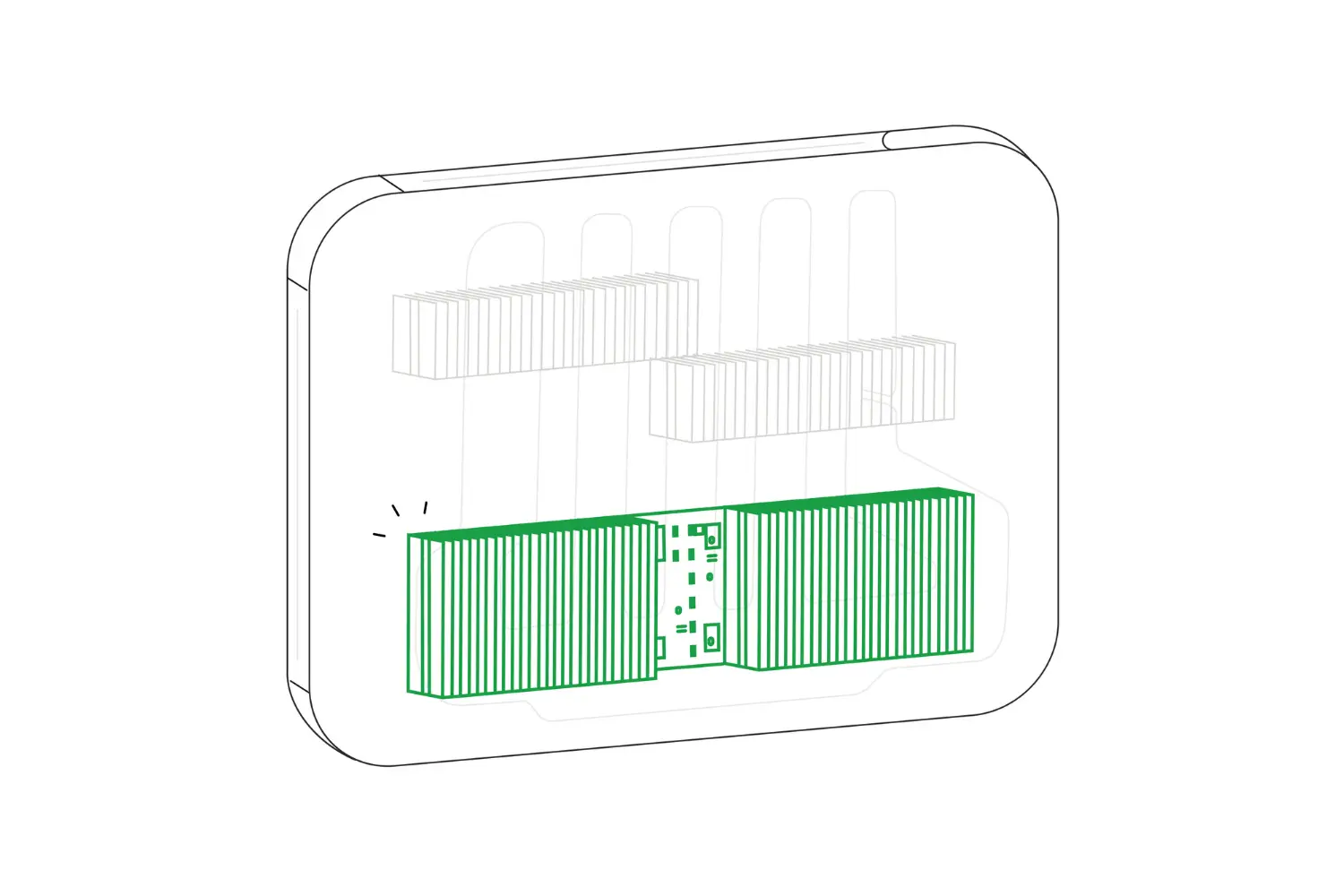
A heater with a computing unit works on the same principle, but it has two heat sources:
- A resistive element, which produces heat through the Joule effect.
- A computing unit, whose electronic components generate heat as they perform digital operations.
Whether the heat comes from a resistive element or a computing unit, all the energy is transformed into heat. There is therefore no loss in efficiency.
The real difference: how the heat is created
Even though efficiency is identical, the way heat is produced differs between a resistive element and a computing unit.
A resistive element uses the Joule effect: an electric current flows through a conductor, raising its temperature and generating heat. Electricity is “burned” directly to produce that heat.
A computing unit, on the other hand, receives electricity not to heat up, but to perform logical operations: it processes calculations, executes tasks, and engages its electronic components. Those components naturally generate heat during operation, and that heat then becomes a usable thermal source.
Once produced, this heat can be recovered through three modes of transfer:
- Conduction, when a material in contact with a hot source gradually transmits the heat.
- Convection, when air in contact with the hot source warms up, rises, and creates a natural airflow that distributes heat throughout the room.
- Radiation — every object emits thermal energy in the form of electromagnetic waves whose frequency varies with its temperature. For example, the sun at 5,800 degrees C emits visible energy, while a heater or the human body, being much cooler, emits in the infrared range.
Regardless of how it is produced, heat follows these same physical principles to be transferred to its surroundings. The only thing that changes is how the heat is created — not how it is distributed.
Computing-based heating = a reduction in primary energy, but not in final energy
A common misconception is that harnessing heat from computing would consume less electricity than a standard heater. This is certainly the question we encounter most often. In reality, that is not the case.
- An electric heater converts 100% of the energy consumed into heat, whether it comes from a resistive element or a computing unit.
- Electricity consumption remains the same: if a heater consumes 1,000 W, those 1,000 W will be fully returned as heat, regardless of the production method.
So why use a computing unit?
In many businesses with computing and server needs, the heat produced by IT equipment is typically wasted and must be removed using cooling systems, which entails additional energy consumption.
In our case, this heat is directly recovered and used to heat a dwelling, eliminating all energy waste on the digital operations side.
This recovery of otherwise lost heat — known as waste heat — enables our heater to be recognised as a renewable energy source.
What changes with waste heat recovery is its impact on primary energy, not on final energy:
- Final energy is the amount of electricity consumed directly by the appliance.
- Primary energy takes into account all the resources required to produce and deliver that electricity (extraction, transport, conversion, etc.).
Thanks to computing-based heating, electricity is optimised by giving it a dual purpose:
- Powering a computing unit to generate digital value
- Recovering the emitted heat to warm a dwelling
This dual purpose therefore improves the overall energy balance and reduces primary energy consumption. However, it does not directly impact the electricity bill, because the amount of final energy consumed remains the same.
In short: the fact that heat comes from a computing unit rather than a resistive element does not reduce the heater’s electricity consumption. The real optimisation lies in recovering energy that would otherwise have been lost elsewhere.
That said, it is the way the heating is used, not its heat production method, that enables occupants to reduce their energy bills. In the case of myEko Pro®, it is the connected features (smart management, remote control, open/closed window detection, occupancy sensor, consumption monitoring) that deliver up to 25% energy savings by preventing waste and optimising daily heating use.
Key takeaways:
- Efficiency is identical between a resistive element and a computing unit.
- All the electricity consumed is converted into heat, with no loss in efficiency.
- Computing does not reduce efficiency — it adds an additional heat source that would otherwise have been wasted.
- Waste heat recovery optimises primary energy, which improves CEP and CEP nR performance.
- It is the heater’s connected features that deliver up to 25% energy savings by optimising heating and preventing waste — not the heat source itself.